High Performance AX6000 Ceiling Mount AP
VigorAP 1062C is a high performance dual-band WiFi 6 Access Point, delivering 1.2Gbps in 2.4GHz and 4.8Gbps* in 5GHz. With it's 2.5GbE port and MU-MIMO technology, it can support up to 256 concurrent clients, making it a perfect choice in high-speed and high-density environments.
Dual-Band
Concurrent 5GHz and 2.4GHz
AX6000
1.2Gbps in 2.4GHz and 4.8Gbps* in 5GHz
1x 2.5G LAN
PoE Capable Port
256 Users
2.4GHz & 5GHz shared concurrently
*5G maximum wireless speeds may vary depending on regional limitations.
Interface
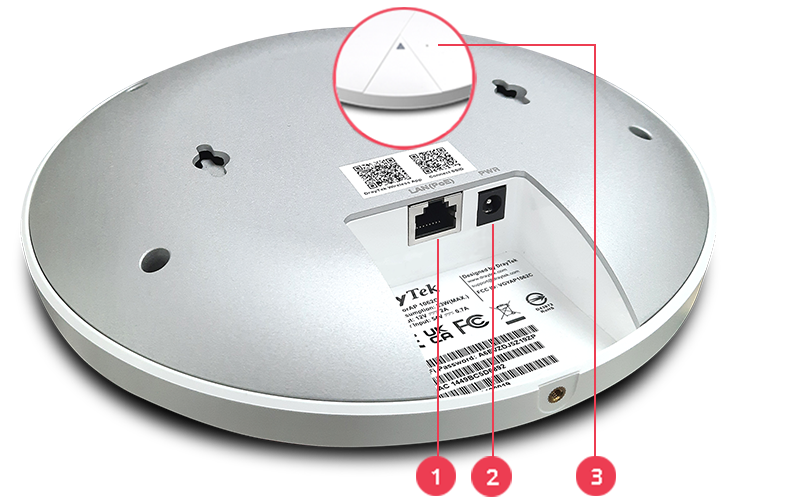
1
LAN:2.5G/1G/100M/10M RJ-45
PoE-PD Support
2DC Power Input
3Factory Reset Button
Key Features

Wi-Fi 6
Feature OFDMA and MU-MIMO technology to improve Wi-Fi efficiency and deliver higher wireless speed.

Band Steering
Redirect 5GHz-capable devices to the 5GHz radio to get a faster speed. Learn more

Mesh
Easily link to other VigorAP to expand the wireless network. Learn more

Assisted Wi-Fi Roaming
Solve the sticky client problem and improve Wi-Fi roaming experience. Learn more

PoE Power Supply
Simplify the infrastructure by getting data and power through a single cable.

Wi-Fi Scheduling
Schedule Wi-Fi On and Off to control wireless access and save energy.

Multiple SSIDs
Mapping Wi-Fi clients to different VLANs and have a different set of security standards Learn how

Virtual AP Controller
All-in-one management platform for VigorAP 1062C to maintain and monitor the VigorAPs.

Airtime Fairness
Equalize the transmission time of each client so the legacy devices won't slow everyone down. Learn more
What's New in DrayOS 5-based VigorAP 1062C
Notification Service
DrayOS 5 now supports push notifications for the VigorAP 1062C and other DrayOS 5 Access Points. With the DrayTek Wireless App (version 1.3.3 or later), network administrators can receive instant notifications for key events such as client disconnections, mesh node offline status, and login attempts. This feature makes it easy for admins to stay updated on wireless network events directly from their mobile devices.

MAC Filtering for Access Control Lists
To bolster network security, DrayOS 5 introduces MAC Filtering for Access Control. This feature allows administrators to control which devices can connect to the network by adding their MAC addresses to a profile. To enable and configure MAC Filtering, follow these steps:
- Go to Security >> MAC Filtering Profile to create a new profile.
- Add device names and corresponding MAC addresses.
- Apply the MAC Filtering settings to the SSID configuration under Configuration >> Wireless LAN to manage access control.

Streamlined Wireless LAN Configuration
In DrayOS 5, the process of setting up wireless network parameters has been simplified. Unlike DrayOS 4, where configurations for SSID, Radio Settings, Roaming, and other options had to be adjusted across multiple pages, DrayOS 5 consolidates all wireless settings into one easy-to-manage page. Administrators can now configure everything from Configuration >> Wireless LAN, providing a more seamless setup experience.

Comprehensive Client Monitoring
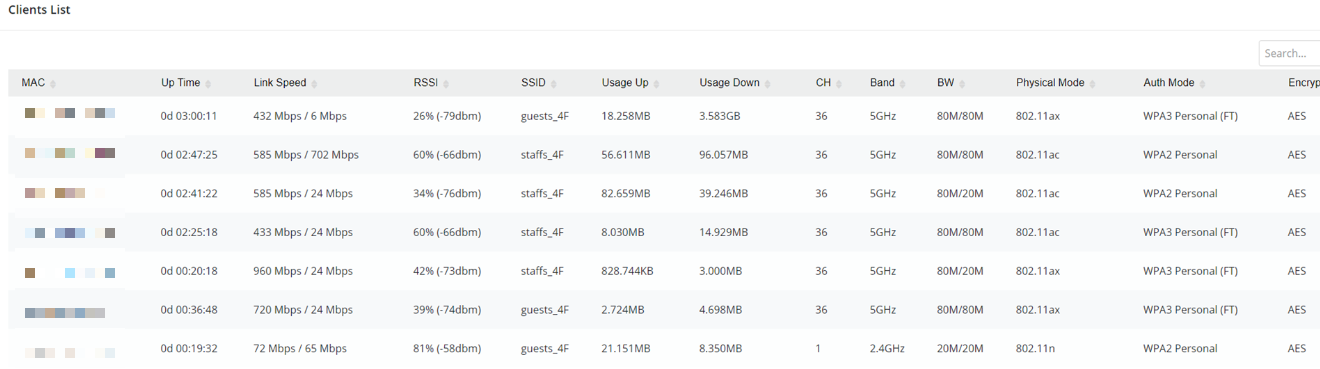
With DrayOS 5, monitoring the status of wireless clients has become more efficient. In previous versions, client information was split between the 2.4GHz and 5GHz settings. Now, all client details can be accessed on a single page under Monitoring >> Clients List, which provides a complete overview of client connections and usage. This enhancement makes it easier to manage and track network clients in one unified location.
WiFi 6 Capacity
OFDMA (Orthogonal Frequency Division Multiple Access) is a key characteristic of the Wi-Fi 6 certification program. Included in the Wi-Fi 6 standard, OFDMA relies on efficient scheduling techniques to function effectively in congested and complex network environments. As Wi-Fi 6 gains traction among manufacturers and the broader industry, it becomes crucial to analyze and document the potential benefits of successful OFDMA implementation and the ability to measure its impact.
OFDM

OFDMA

MU-MIMO is similar to multiple trucks serving users simultaneously. It increases capacity and results in higher speed per users.

BSS Coloring is a technique used to improve co-existence of overlapping BSSs and to allow spatial reuse within one channel .Simply say BSS coloring helps in mitigating problem of co-channel interference found in legacy Wi-Fi networks.

TWT (Target wake time ) ensures that end devices spend more time in standby while sending and receiving data more economically. This reduces energy consumption and increases overall efficiency within the home network. It allows an AP to manage activity in the Wi-Fi network, in order to minimize medium contention between Stations (STAs), and to reduce the required amount of time that an STA in the power-save mode needs to be awake.

WPA3 (Wi-Fi Protected Access 3) enhances the security of Wi-Fi networks by addressing vulnerabilities in previous standards (like WPA2) and introducing new features to protect modern wireless communications better. WPA3 was introduced in 2018 to provide stronger authentication, better encryption, and improved defenses against attacks such as brute-force password guessing and man-in-the-middle exploits.
DrayTek's Wi-Fi 6 encryption:
- WEP (64 / 128-bit)
- WPA / WPA2 / WPA3 / OWE
And you may check below comparison table to see WPA3's strength is obviously an surplus development in WLAN security design.
| WEP | WPA | WPA2 | WPA3 | |
|---|---|---|---|---|
| Encryption | RC4 | TKIP / RC4 | AES-CCMP | AES-CCMP / AES-GCMP |
| Session Key | 64/128 bit | 128 bit | 128 bit | 128/256 bit |
| Authentication | Open system, shared key | Pre-shared key | Pre-shared key | AES-CCMP / AES-GCMP |
| Level of Security | Very low | Low | Moderate | High |
Seamless Wi-Fi Roaming

Fast & Smooth Handover
- Switch between access points seamlessly with intelligent roaming support.
- Supports Over-the-DS (via wired backbone) and Over-the-Air handoffs for reliable connectivity during video calls, voice chats, and real-time applications.
Smarter Assisted Roaming
- Signal thresholds and AP steering help devices move to stronger APs and balance network loads.
- Enjoy stable performance across all devices, everywhere.
Always Optimized for Business
- From offices to campuses, seamless roaming ensures uninterrupted mobility.
- Reliable coverage built for the demands of modern workplaces.
WiFi Roaming
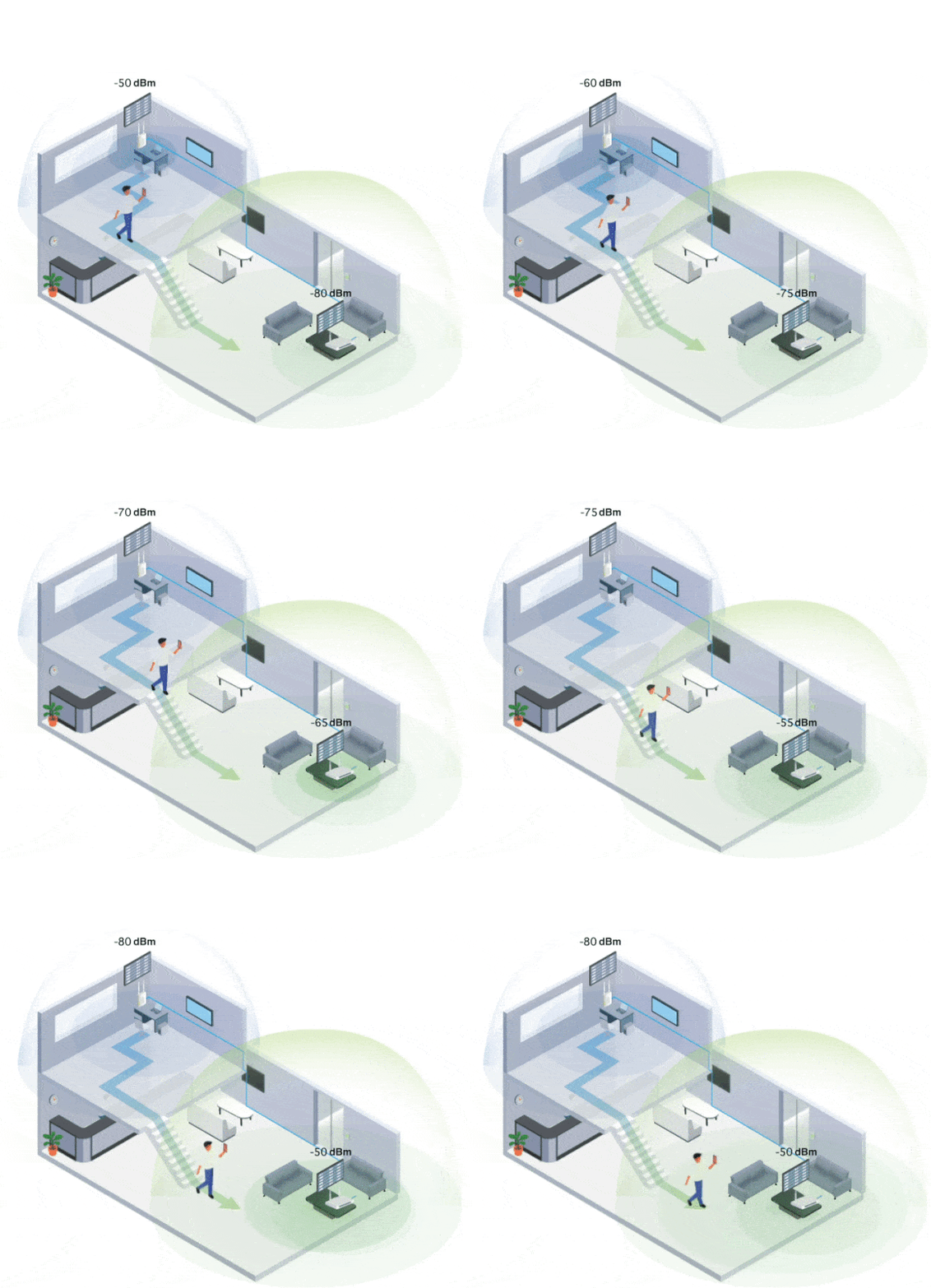
WiFi roaming is essential in environments with multiple APs to ensure consistent and reliable wireless connectivity. It enhances the wireless experience by addressing the sticky client issue and ensuring smooth WiFi roaming.
Roaming Protocol
The VigorAP 1062C supports advanced roaming protocols, including 802.11r, 802.11v, and 802.11k. These protocols allow WiFi clients to seamlessly switch to an AP or router with a stronger signal as they move within a network with multiple APs or routers. Clients compatible with these roaming protocols benefit from proactive and uninterrupted roaming.
Assisted Roaming
The "Minimum RSSI with Adjacent AP" feature in the VigorAP ensures clients are disconnected only when a nearby AP or router offers a stronger signal. This prevents unnecessary disconnections and keeps clients connected to the most optimal access point.
Three Modes in One
AP Mode
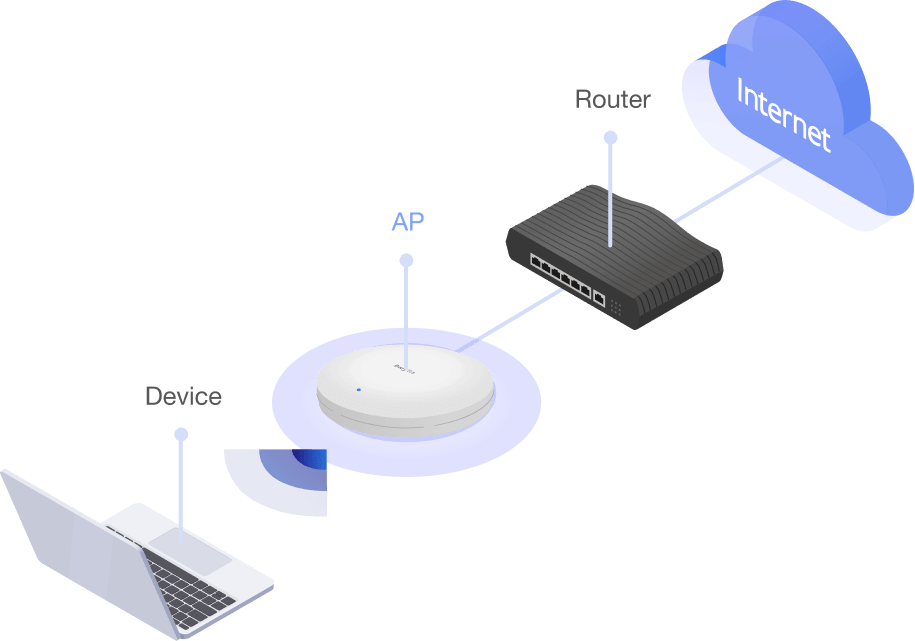
- The mode mostly used
- VigorAP acts as a bridge between wireless devices and wired Ethernet network, and exchanges data between them.
Pros
- Less performance decay
Cons
- Limited wireless coverage
- Require physical wire to connect to the Ethernet
Range Extender
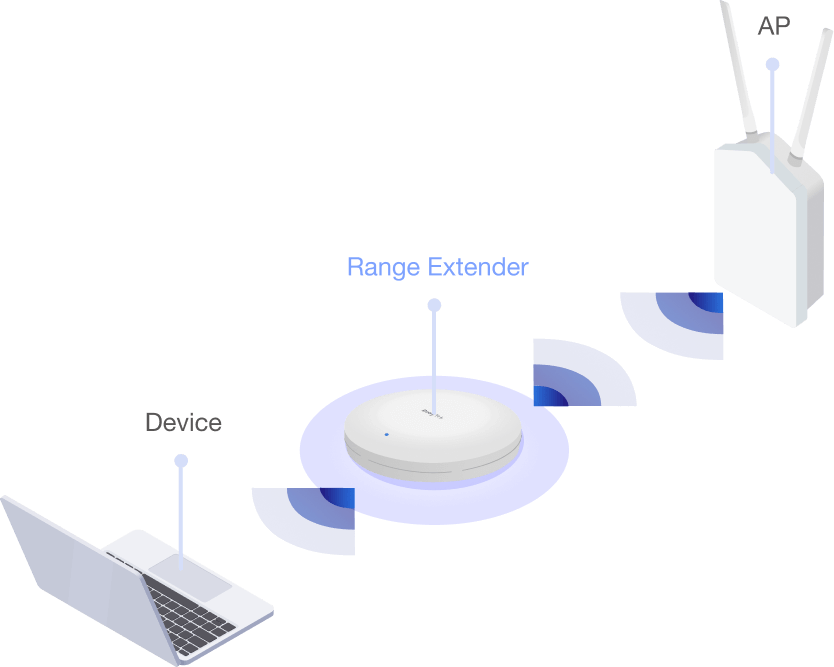
- VigorAP act as a wireless repeater
- It can be a Station and an AP at the same time
Pros
- Compatibility among different brands
- Extend wireless coverage
Cons
- No self-healing uplinks
- Need to install and check manually
- Performance decay
Mesh
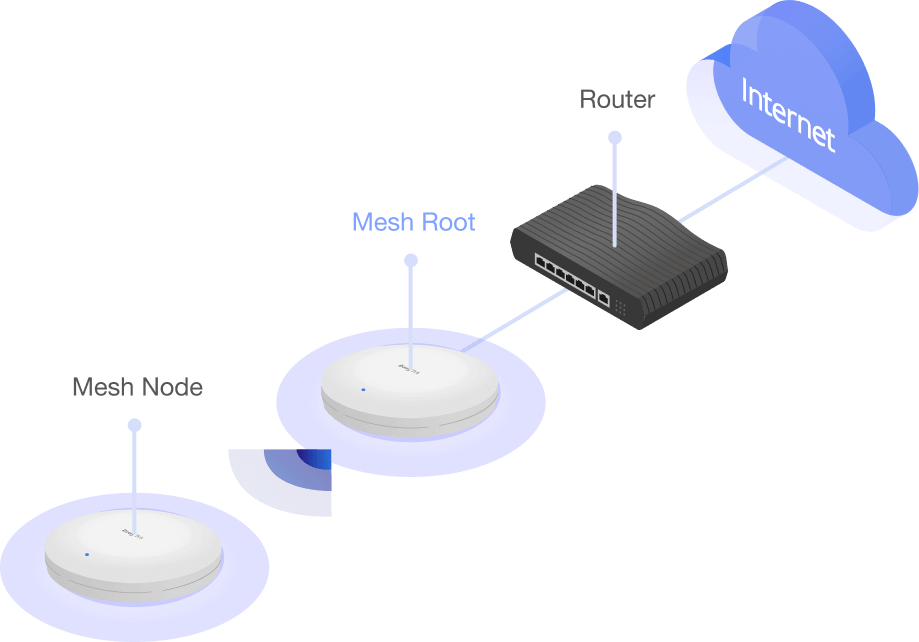
- Wirelessly connect 1~8 APs, and form a Mesh Group
- A mesh network creates a set of links automatically and calculate the most optimal wireless path through the wireless network back to a wired Mesh Root.
Pros
- Easy installation
- Self-healing uplinks
- Extend wireless coverage
Cons
- No compatibility among different brands
- Performance decay
Router-based AP Management
DrayTek provides an all-in-one management platform for Vigor devices on the LAN side.
Automatic Device Discovery
All you need is connect the VigorAP to the LAN side of the router, Vigor Router will then discover the devices to be managed.
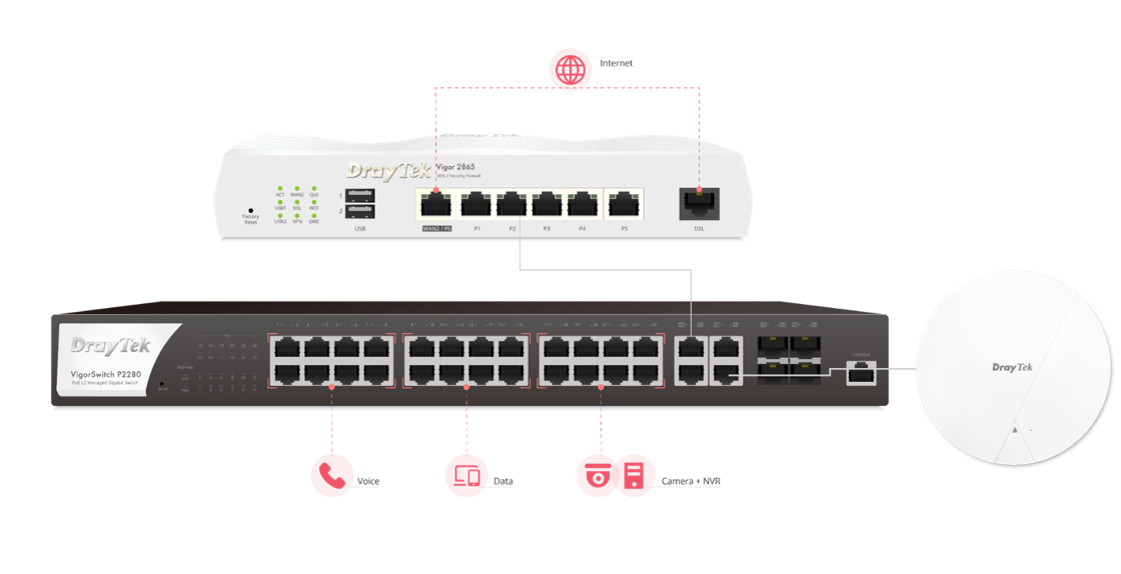
Provisioning
Wireless LAN profile may be set previously on the Vigor Router. Once the managed VigorAP is connecting to the router, the setting profile will be provisioned to the VigorAP automatically.
Monitoring
Vigor Router provides a centralized view of managing devices, you may always check if the managed VigorAP is online.
System Maintenance
You may perform a factory reset, save/restore a configuration backup, or trigger a remote reboot directly on the Vigor Router. There’s no need to log in to each device’s management page.
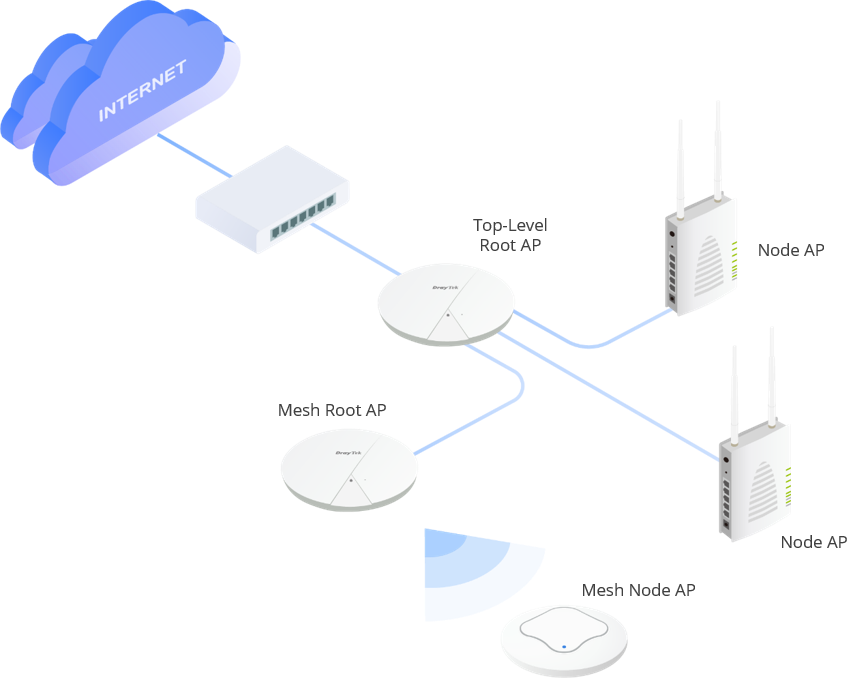
Wireless Virtual Controller
Intelligent Auto-Configuration
When connecting to the VigorAP 1062C, this feature automatically detects whether the access point (AP) is wired or wireless and determines the most suitable network topology. For smaller managed deployments with fewer than 8 APs, it functions as the Root AP to enable Mesh mode, managing up to 7 Node APs. For larger managed deployments with up to 50 APs, it activates AP management mode, providing enhanced control and scalability.
Wireless Device Monitoring
The intuitive panel provides a comprehensive overview of your network, allowing you to monitor devices, mesh statuses, and nearby APs effortlessly. It provides detailed insights, including WLAN clients, MAC and IP addresses, connection statuses, SSIDs for each radio, the number of connected clients, and firmware versions—all accessible on a single page. Even offline APs are easily identifiable, simplifying network management and optimization.
Zero Touch Deployment
Once a Node AP is auto-detected and added to the management group, the Root AP automatically provisions all necessary configurations to the Node APs, streamlining the setup process.
Software Solution
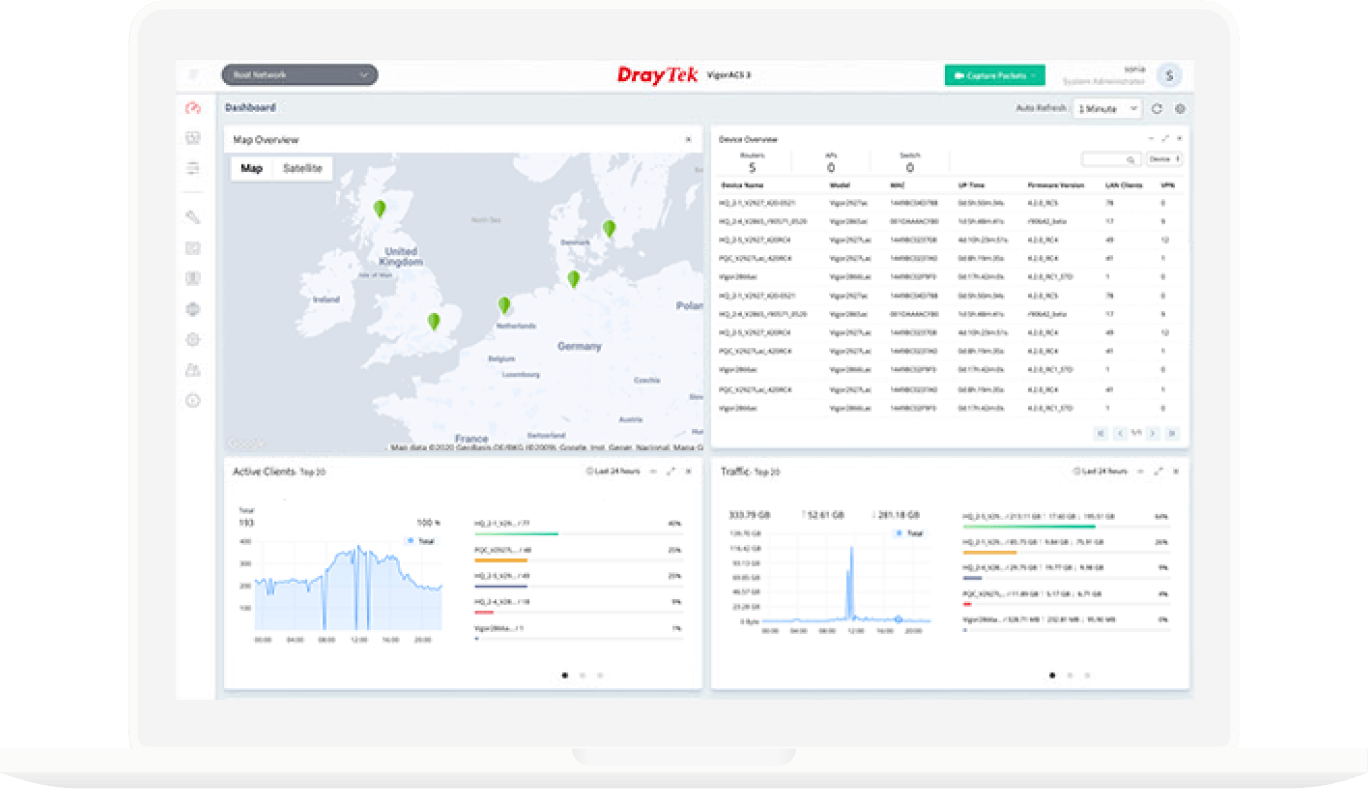
VigorACS 3
- Provisioning
- Monitoring
- Centralized Hierarchy View
- Alarm
- Remote AP/Switch/Router Maintenance
- Scheduled Maintenance
- Report
VigorConnect
- AP/Switch Discovery
- Auto-Provisioning
- Monitoring
- Centralized Hierarchy View
- Alarm
- Remote AP/Switch Maintenance
- Scheduled Maintenance

DrayTek Wireless APP
- Build Wireless Network
- Monitoring
- Parental Control & Client Management
- Mesh WiFi Setup
- Check signal strength and speed test
- Scheduled Maintenance

In the box
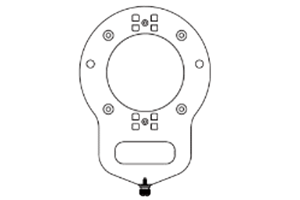 Ceiling Mount Bracket
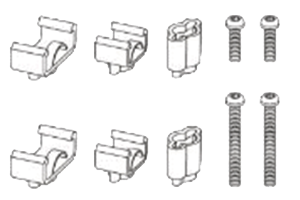 Kits & Screws
(Used for T-Rail Mounting)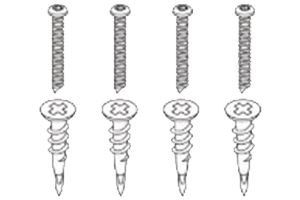 Screws
(for ceiling mounting)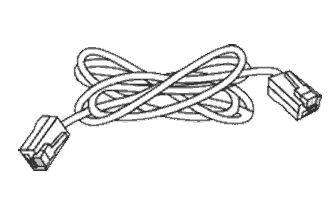 RJ-45 Cable (Ethernet)
 Quick Start Guide
Note: The stated throughput performance figures are the maximum derived from DrayTek internal testing, conducted under optimal conditions, with Hardware Acceleration enabled where available. The actual performance may vary based on network conditions and activated applications.